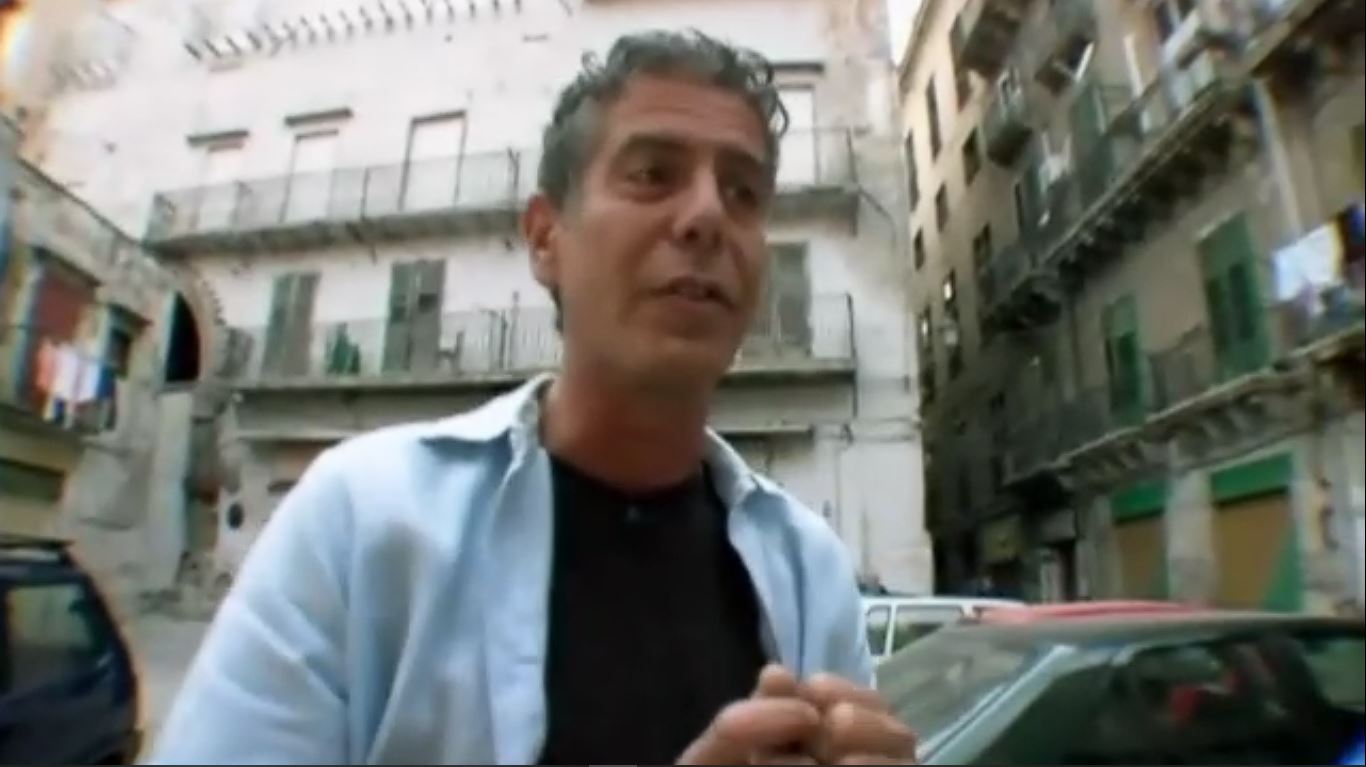

Dark, brooding, and bearing the heavy architectural and culinary scars of endless conquerors, Sicily is an island that operates entirely on its own stubborn terms. Venturing into this deeply traditional environment for a 2005 episode of No Reservations, the objective was to uncover the incredibly complex, often challenging food culture that exists under the long shadow of the Mafia. The culinary landscape here is a brilliant, heavy collision of Arab, Spanish, and Italian influences, resulting in dishes that are intense and fiercely hyper-local. The journey dove headfirst into the chaotic, unapologetic reality of the Palermo street markets, bypassing polite dining to devour infamous, polarizing spleen sandwiches and mysterious fried animal bits known as frittola. Yet, it also found moments of profound, simple elegance, like a perfectly salt-baked spigola and the iconic, ricotta-filled mastery of a classic cannoli. It is a hilarious, frustrating, and ultimately beautiful exploration of a society that absolutely refuses to change for outsiders. To truly understand the fierce pride of this island, you must hit the streets. Here are the essential, robust locales that defined this classic adventure.
When Anthony Bourdain visited Sicily, Italy, on his show No Reservations, he and his crew picked many restaurants. Here are all the addresses and the dishes showcased in a convenient list.
This is No Reservations, season 1, episode 6. It first aired on October 10, 2005.
READ MORE: BEST SHOPPING IN ROME: 10 PLACES TO VISIT
DISH – Panino al Panelle – Anthony Bourdain Sicily
WHAT IS IT?
They had panino al panelle, which is bread with chickpeas, and a spleen sandwich with cheese.
“In the 16-hundreds, they thought the spleen was the source of all emotion and passion.” -Anthony Bourdain
WHERE IS IT?
Antica Focacceria San Francesco
Via Alessandro Paternostro, 58, 90133 Palermo PA, Italy
Palermo, Italy
DISH – Watermelon Gelee – Anthony Bourdain Sicily
WHAT IS IT?
After eating the sandwich, they had a dessert called watermelon gelee with pistachios and chocolate.
“It’s beautiful, it’s just light and beautiful little chunks of chocolate and pistachio.” -Anthony Bourdain
WHERE IS IT?
Palermo, Italy
NOTES – Anthony Bourdain Sicily
Unfortunately, the exact name and location of the restaurant is unknown.
DISH – Frittola – Anthony Bourdain Sicily
WHAT IS IT?
They sampled some street food on the way and then they ate a frittola, which is made up of all the pieces of different animals cooked together.
“Stock meat, dried odd bits. I can hang out here all day.” -Anthony Bourdain
WHERE IS IT?
Mercato del Capo
Via Cappuccinelle, 90138 Palermo PA, Italy
Palermo, Italy
READ MORE: ANTHONY BOURDAIN WEST VIRGINIA : ALL OF THE RESTAURANTS PICKED ON PARTS UNKNOWN
DISH – Spigola baked in salt
WHAT IS IT?
First: Octopus salad, pasta, caponata or Sicilian eggplant dish.
Second: Spigola (European bass), baked in salt.
“It essentially cooks its own juices. Moisture tries to escape and is forced back in.” -Anthony Bourdain
WHERE IS IT?
Salt Museum
Via Chiusa, 91027 Nubia TP, Italy
Nubia, Italy
DISH – Cannoli – No Reservations Sicily
WHAT IS IT?
Anthony Bourdain went to Pasticceria Chemi located at Sicily.
They had a cannoli made of deep fried shell of pastry dough filled with ricotta.
“The cannoli is the most iconic of all Italian desserts.” -Anthony Bourdain
WHERE IS IT?
Pasticceria Chemi
Corso Umberto, 102, 98039 Taormina ME, Italy
Taormina, Italy
NOTES
Unfortunately, this restaurant has since closed its doors.
READ MORE: ROME: ALL OF THE RESTAURANTS PICKED BY ANTHONY BOURDAIN ON THE LAYOVER
This plunge into Sicily remains one of the most famous and comically frustrating episodes of his early career, legendary for the host’s visible annoyance at the manufactured, stereotypical experiences initially forced upon him. In his broader catalog, it serves as a brilliant turning point where he fiercely demanded unvarnished authenticity, refusing to film a sanitized, mob-themed travelogue. Once he broke free, his sheer joy in devouring a greasy spleen sandwich in a chaotic market perfectly summarized his entire culinary ethos: the best food is often the weirdest, rooted deeply in working-class history. It is a highly memorable, historically significant hour that respects the true, complicated nature of the island. Abandon the tourist routes, find a local market, and let the bold, heavy flavors of the south completely conquer your palate.


