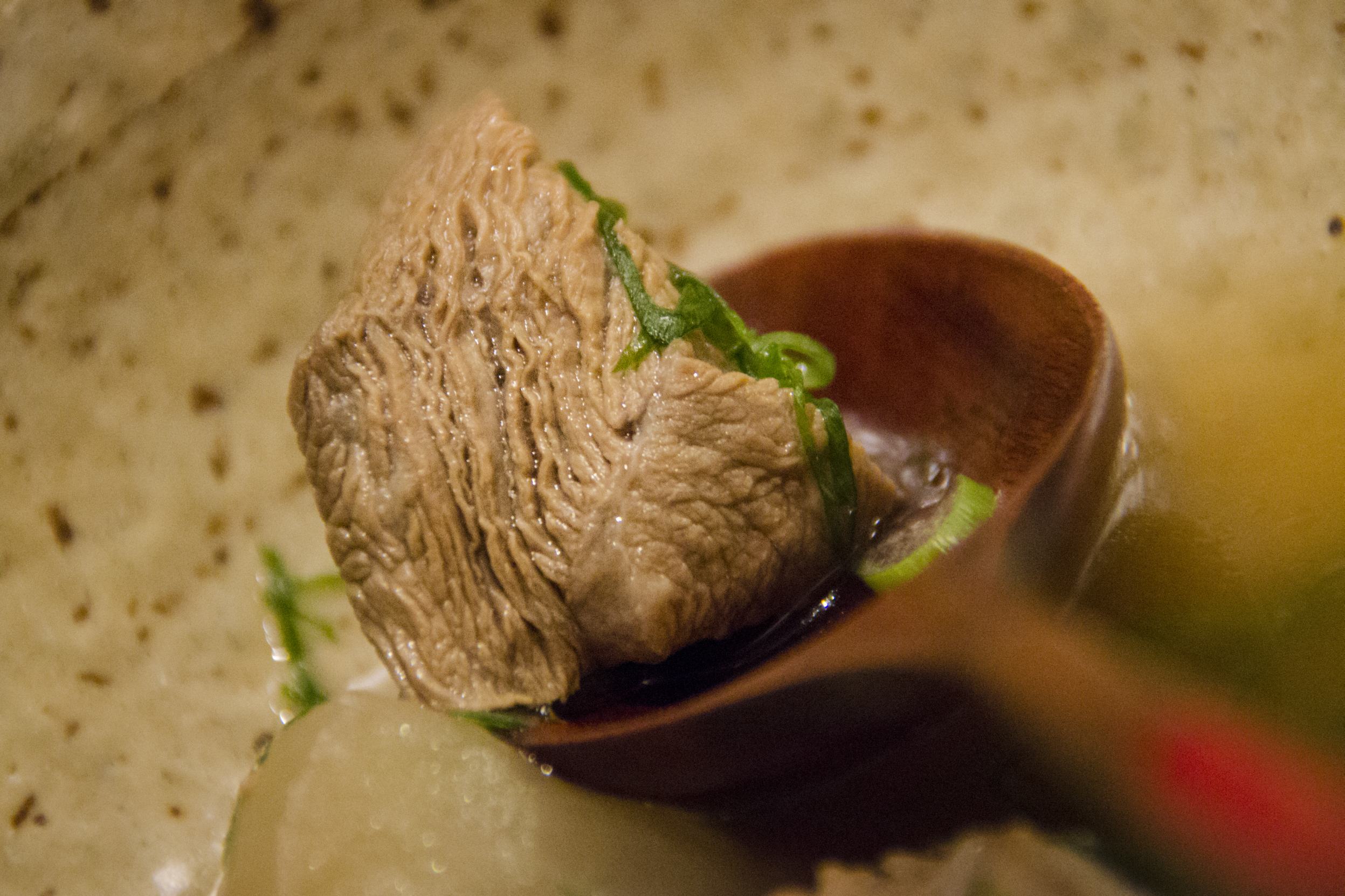
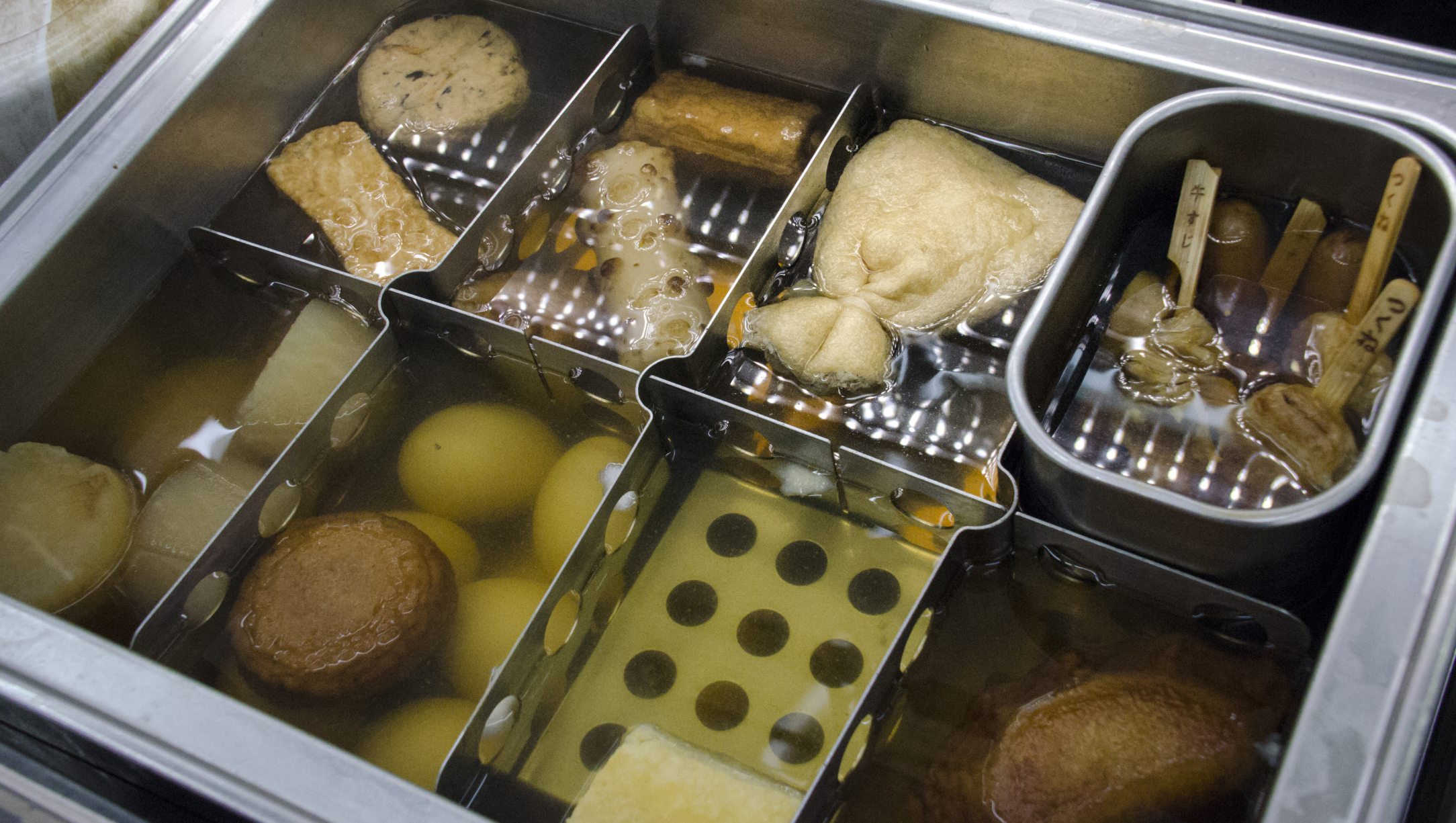
On the other hand, people on a budget will want to go to one of the hundreds of Lawson convenience stores in Tokyo. The food they sell is of surprisingly good quality. In these convenience stores, rice maintains the spotlight. One of the most common snacks available there are rice balls and rice triangles stuffed in different ways and covered with a sheet of nori. In order to keep the seaweed leaf crispy, it is packed separately: customers unpack the rice and nori, and then reform the triangle before eating. Bento boxes (a lunch box with several interesting tidbits) are also for sale and freshly prepared.
48 Hours in Tokyo – Afternoon Shopping in Tokyo
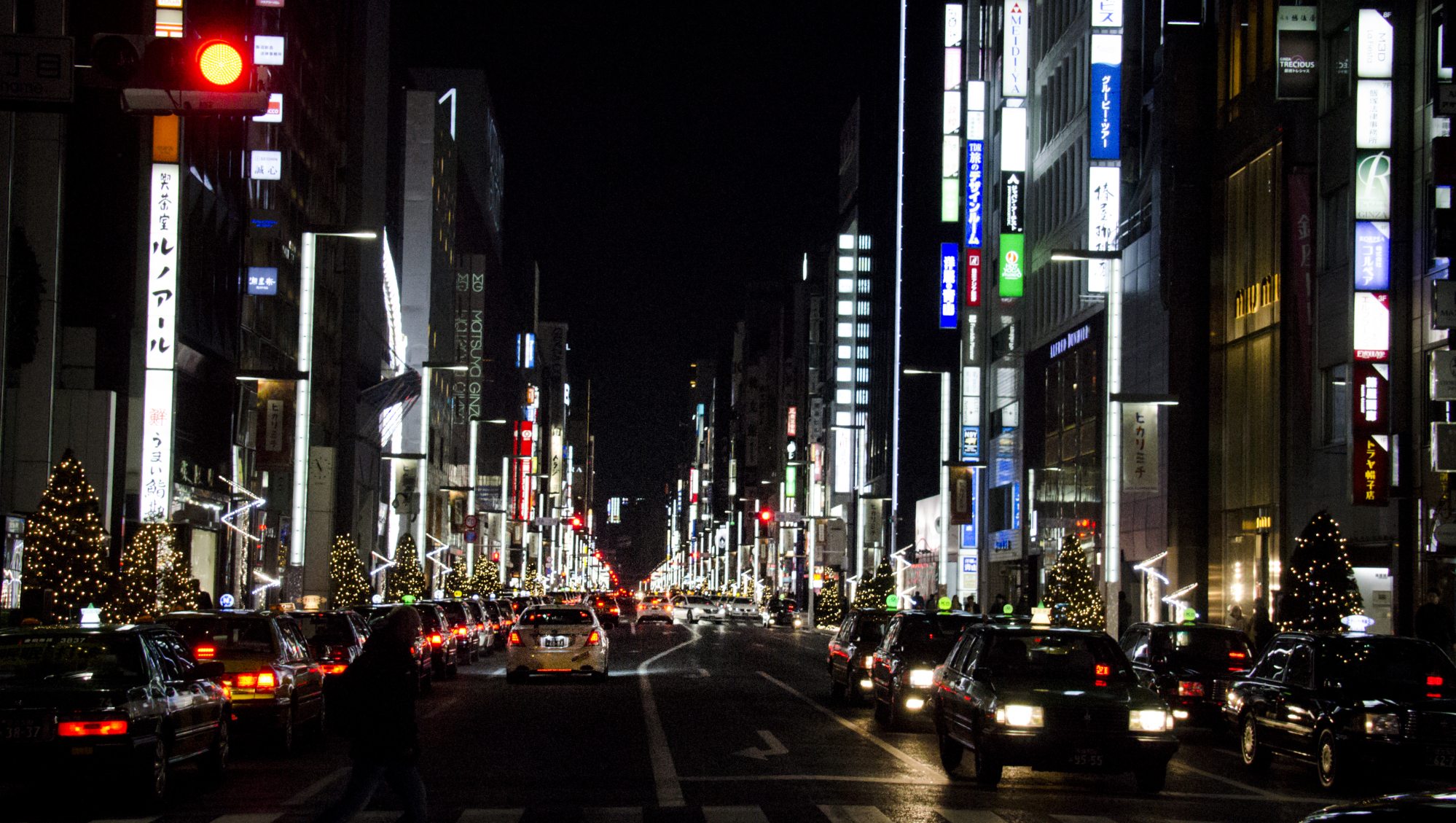
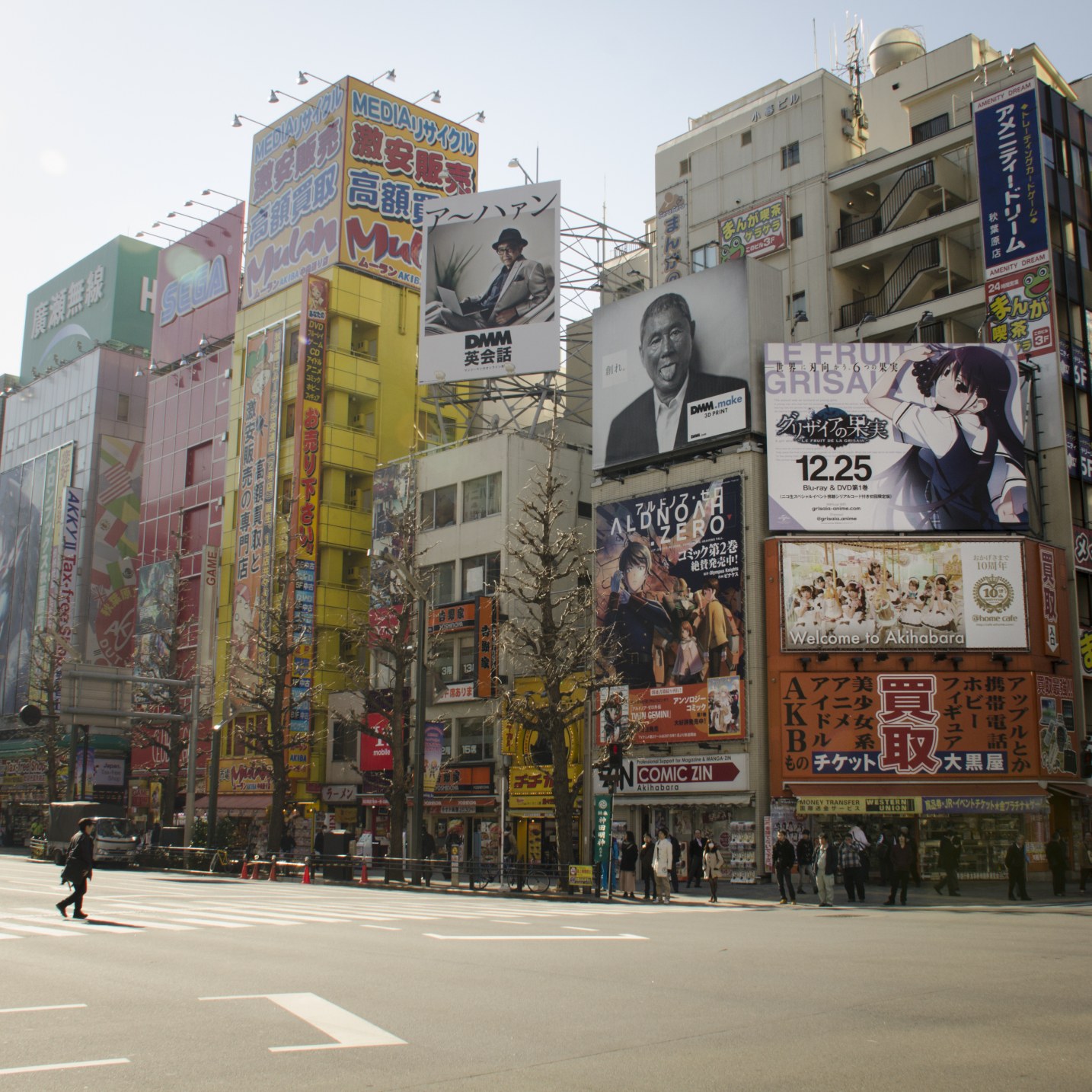
Akihabara is best described as the mecca of video games, manga, animes and electronics in general. Here you will find plenty of things to do in Tokyo. Here, when the sun sets, one can barely notice it, as huge billboards and illuminated twinkling and flashing lights catch the eyes from all directions. Young women dressed as babies hand pamphlets to passersby. Businesses in buildings up to ten floors high sell comics for children and adults, some of them cute and fun, others very suggestive and downright bizarre. Around each block are several pachinkos — huge casinos without croupiers, where the sound is thunderous and the smell of cigarettes is ever present — are available at any time of the day. Second-hand computer and camera vendors also offer their goods.
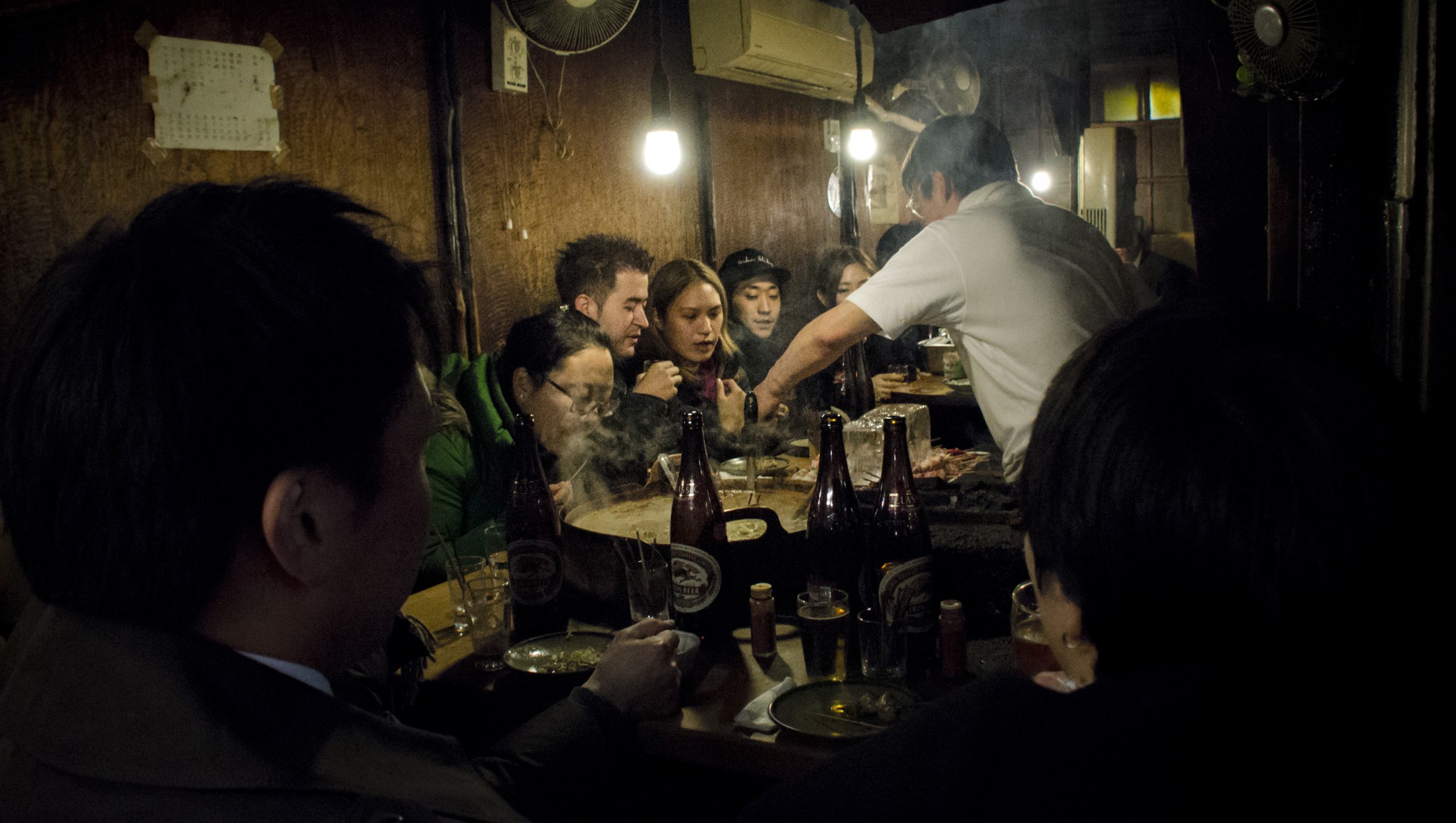
For dinner, you can go to Omoide Yokocho at the Metro Station (JR Shinjuku). In these two back alleys with their back on the JR rails, steps down from Shinjuku Station, many different tiny yakitori and horumonyaki joints sit. Yakitori is skewered, marinated, and grilled chicken. Horumonyaki, which literally means “grilled hormones,” is marinated and grilled offal. Here, you can eat and drink, shoulder to shoulder with a good mix of locals and tourists in tiny restaurants. Between six to 12 guests maximum crowd each restaurant. You can basically order three things on Omoide Yokocho: meat, beer and shochu.
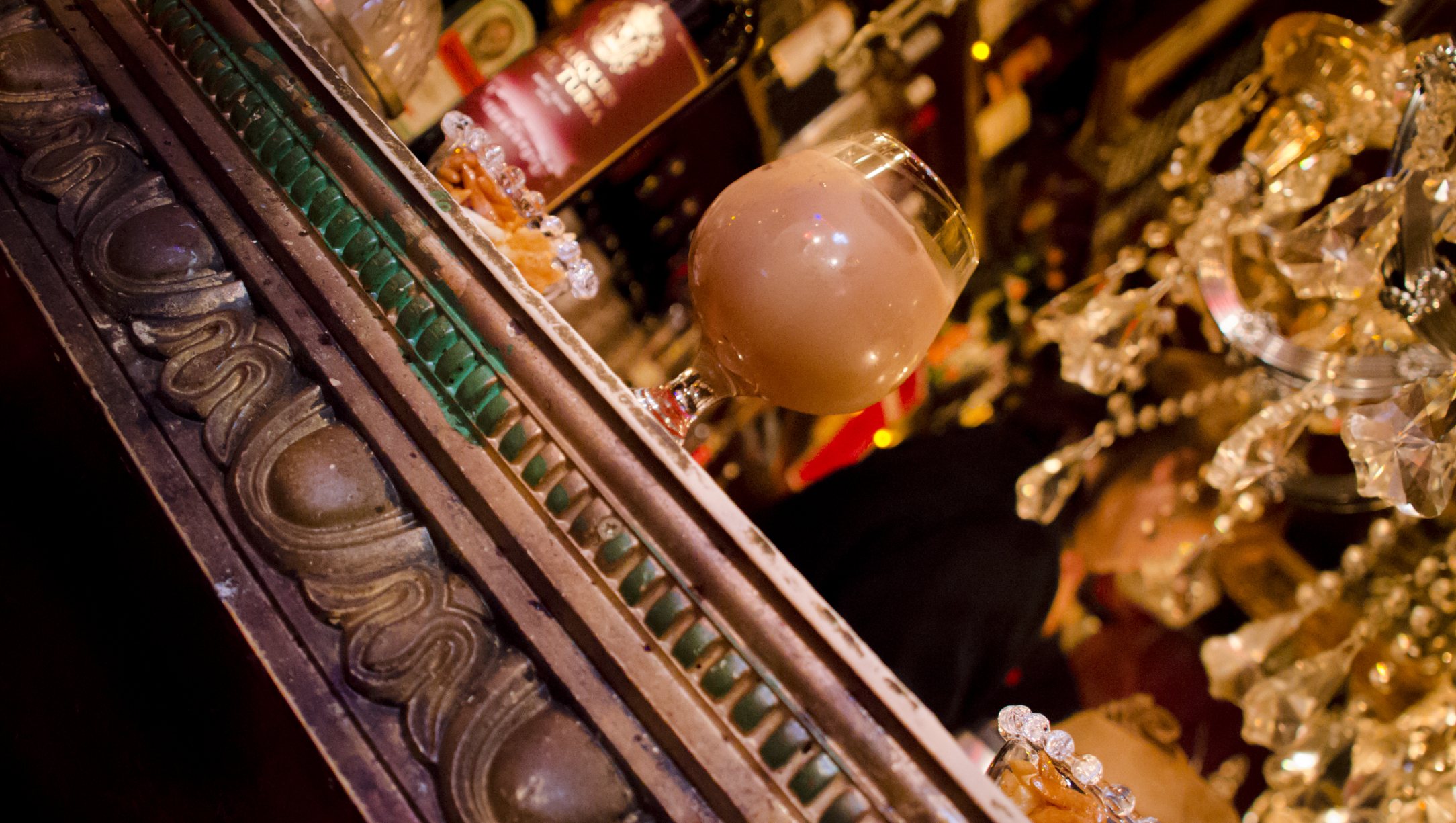
Right after dinner, you will want to take a look at Golden Gai in Kabukicho. In these few small back alleys, tiny bars serve liquor at exorbitant prices to tourists. The majority of these bars have cover charge for Japanese patrons only, while foreigners enter free. Despite the high prices of liquor here, the experience is indeed unique and must not be missed. Some of these bars can only welcome four guests at a time!
Tokyo is one most fascinating and westernized cities in Asia. The streets are squeaky clean and the people are wonderfully polite. Though it has a very effective public transport system, the city is somewhat difficult to navigate due to its disproportionate size. Tokyo is so immense that it is difficult to make an actual selection of tourist attractions to visit. As a matter of fact, for the sake of convenient organization, it is advisable to choose or determine beforehand a neighborhood to be visited and focus on it.
Tokyo: Getting There… And Back Out
Narita International Airport (also called Tokyo Narita Airport and New Tokyo International Airport) in Narita and Tokyo International Airport (also called Haneda Airport and Tokyo Haneda Airport) in Ōta are the two primary airports in Greater Tokyo Area. The majority of international flights depart and land in Narita. The two airports are nearly two hours away from each other by train or bus.
All Nippon Airways has flights in Chicago, Honolulu, Houston, Los Angeles, New York City, San Francisco, San Jose, Seattle, and Washington, D.C.
Japan Airlines operates in Anchorage, Atlanta, Boston, Chicago, Dallas (resumes November), Honolulu, Kona, Los Angeles, New Orleans, New York City, San Diego, San Francisco, Seattle, and Wake Island.
Air Japan flies out of Honolulu, and in case you have a cargo, Nippon Cargo Airlines serves in Anchorage, Chicago, Dallas, Los Angeles, New York City, and San Francisco, and lands at Narita International Airport.
JR trains (Narita Express and Airport Narita) and Keisei trains (Skyliner, City Liner, Access Express, and Limited Express) operate at the Narita airport beneath Terminals 1 and 2. At the Haneda airport, Tokyo Monorail trains serve underneath Terminals 1 and 2, while Keikyu trains (also known as Keihin Kyuko) take passengers both at the domestic and international terminals. Avoid the public bus at all costs because of extreme traffic congestion in the city. Taxis are quite pricey.
Here’s a warning: The Metro closes at midnight and JR trains stop operations at half past midnight. Taxis are the only mode of transport available at that time throughout the city.
Where to Stay in Tokyo
Tokyo is full of expensive hotels, cheap capsules, bad hostels, and rooms for rent at different rates. Real estate comes at a prime price in the city and it might be difficult to find good value for 48 hours in Tokyo.
Park Hyatt Tokyo is the luxurious hotel where the movie Lost in Translation was shot.
If you want a cool place for men or women only, you must not miss Green Plaza Shinjuku. This uniquely Japanese place combines capsules (a box to sleep in), restaurants, sauna, spa, and prime location. You have to take note however that its policies include denying service to minors and customers with tattoos.
READ MORE: WHAT TO DO ONE WEEK IN TOKYO: THE BEST ADDRESSES